40 Pinterest stats that matter to marketers in 2026
Key takeaways
- Pinterest reached 631 million monthly active users in Q1 2026, its tenth straight quarter of double-digit growth.
- Women make up 70% of users, and Gen Z is the platform’s fastest-growing audience.
- Pinterest users run more than 80 billion searches a month and are nearly 90% more likely than users on other platforms to say they’re ready to shop.
- Only 22% of companies market on Pinterest, which means less competition and lower ad costs for brands that show up.
Pinterest growth and platform statistics
Start with the headline numbers. These stats show how big Pinterest is, how fast it’s moving, and how people feel about being there.
1. As of Q1 2026, Pinterest has 631 million monthly active users (MAUs)
631 million people use Pinterest every month, up 11% year over year. That marks the tenth straight quarter of double-digit user growth.
For marketers, that steady climb in monthly active users means a bigger, more reliable audience to reach, and a sign Pinterest isn’t going anywhere.
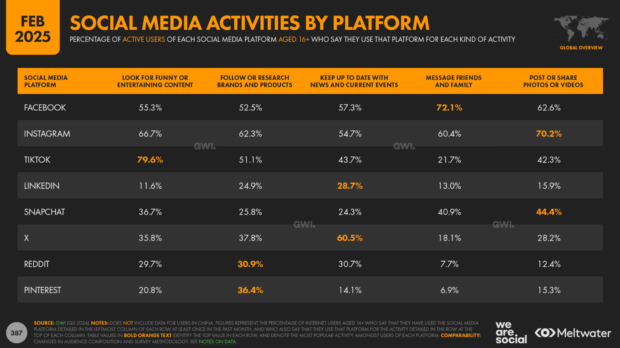
2. Brand and product research is Pinterest’s #1 use case
It’s the single most popular activity among Pinterest users, outranking entertainment, posting, news, and messaging.
Source: Datareportal
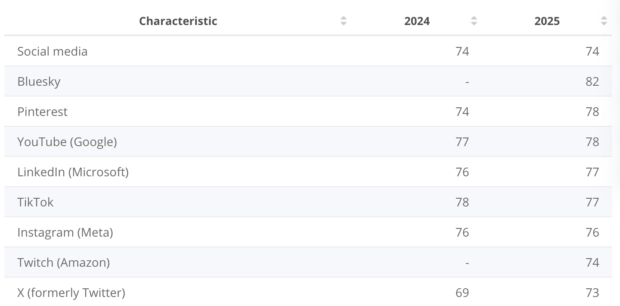
3. Pinterest users enjoy the platform more than most social networks
Pinterest has a reputation as one of the calmer corners of the internet, and the numbers back it up.
It scored 78 on the American Customer Satisfaction Index (a measure of how satisfied US consumers are with a service) in 2025, beating Instagram, TikTok, and Facebook.
That goodwill matters. When people actually enjoy being on a platform, they’re more receptive to the content and brands they run into there, which makes Pinterest a friendlier place to market than the platforms people love to complain about.
Source: Statista
4. Many of the most-followed Pinterest accounts belong to retailers and brands
Brands hold a lot of the top spots on Pinterest, including Etsy (11.0M followers), Shein (7.9M), Nordstrom (5.5M), Target (4.8M), and Better Homes & Gardens (4.1M), as of February 2025. The single most-followed account is Wattpad at 32.4 million, followed by Oh Joy (15.1M), Etsy, Poppytalk (10.4M), and Tasty (10.3M). Pinterest’s own account ranks 20th, at 6.2 million.
5. Sports culture is driving Pinterest’s biggest summer 2026 trends
Searches tied to major sporting moments have surged in summer 2026, with “World Cup jerseys” up 840%, “dad sneakers” climbing 906%, and “Formula 1 aesthetic” outfits up 483%, according to Pinterest’s Summer 2026 Trend Report.
Tracking Pinterest trends like these early can give you a head start on seasonal content before everyone else catches on.

Source: Pinterest
Pinterest user and demographic statistics
Pinterest demographics skew young, female, and more affluent than you might expect. Here’s who you’re actually reaching.
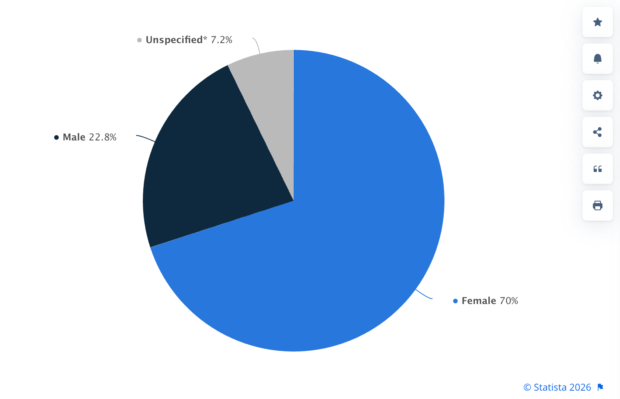
6. Pinterest’s audience is 70% female
Pinterest’s audience is majority female, with male users making up just under a quarter (22.8%). That female skew makes Pinterest especially valuable for brands in fashion, beauty, and home categories targeting younger women.
Source: Statista
7. Women lead Pinterest usage in every age group
No matter the age bracket, women use Pinterest in bigger numbers than men:
Age | Women | Men |
|---|---|---|
16–24 | 45.1% | 27.7% |
25–34 | 31.1% | 20.8% |
35–44 | 25.6% | 17.1% |
45–54 | 24.5% | 16.9% |
55–64 | 24.5% | 15.0% |
65+ | 26.5% | 11.0% |
Source: DataReportal
8. Gen Z is Pinterest’s fastest-growing audience
Pinterest has called Gen Z its fastest-growing audience, now over 40% of global monthly users, and its reach skews young across the board. In the US, Pinterest reaches:
- 46% of people ages 18-24
- 40% of people ages 25-34
- 39% of people ages 35-44
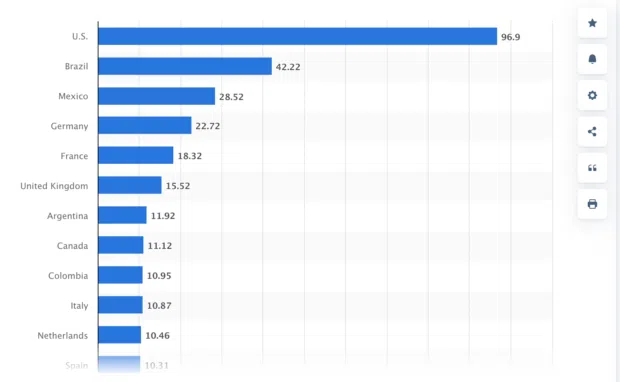
9. The United States has the largest Pinterest audience in the world
As of October 2025, the US has 96.9 million Pinterest users, followed by Brazil (42.2M), Mexico (28.5M), Germany (22.7M), and France (18.3M).
Source: Statista
10. Pinterest reaches 40% of US households with annual income over $150K
That high household income reach makes Pinterest a strong channel for brands targeting affluent consumers, and Gen Z now represents nearly half of its luxury audience.
11. Most Pinterest users are also active on Instagram, YouTube, and WhatsApp
Pinterest users rarely stick to one platform. Of people who use Pinterest, here’s what else they’re using:
- Instagram: 86.8%
- YouTube: 79.5%
- WhatsApp: 79.0%
- Facebook: 78.1%
- TikTok: 59.7%
12. 60% of Reddit users also use Pinterest
Reddit and Pinterest might seem like an unlikely pair: One runs on opinionated comment threads, the other on calm mood boards. But their audiences overlap more than any other platform combo.
Of all the major networks, Reddit’s users are the most likely to also be on Pinterest. For marketers, that’s a useful signal: if you’re already reaching people on Reddit, there’s a good chance you can find that same crowd on Pinterest.
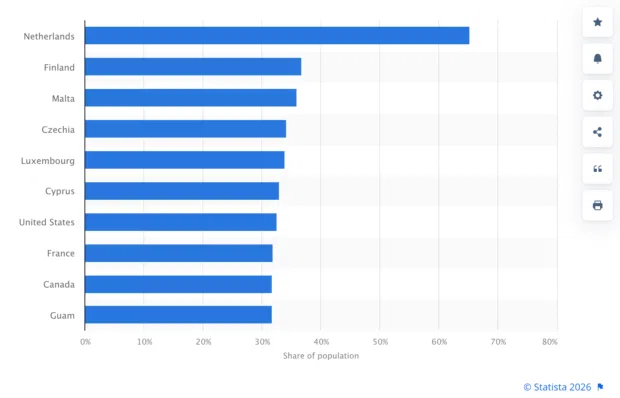
13. Pinterest is most popular in the Netherlands
As of October 2025, the Netherlands has the highest usage of any country (65.3%), followed by Finland (36.8%), Malta (36%), Czechia (34.2%), Luxembourg (33.9%), Cyprus (33%), the US (32.6%), and Canada (31.7%).
Source: Statista
Pinterest usage and behavior statistics
Pinterest behaves less like a feed and more like a search engine. These usage statistics show how people actually move through the platform.
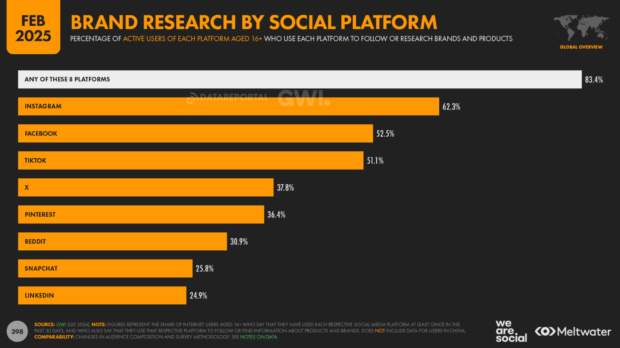
14. 36% of Pinterest users use the platform to follow or research brands and products
On most social platforms, branded content is what people scroll past to get to the good part. On Pinterest, it’s kind of the main attraction. More than a third of users come specifically to follow or research brands and products, which is exactly the mindset marketers dream about.
In short, Pinterest is a brand discovery engine, not just another social feed.
Source: Datareportal
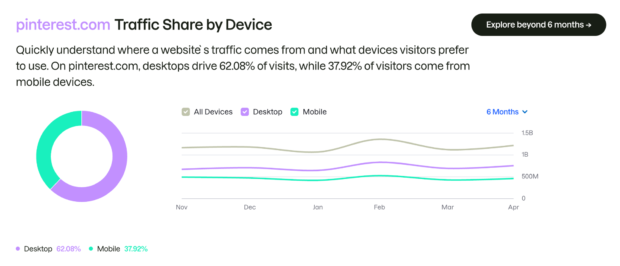
15. Most Pinterest website traffic comes from desktop
Pinterest might live on your phone, but its website tells a different story.
62% of visits to pinterest.com come from desktop, with the remaining 38% from mobile, according to 2026 Semrush data. Remember that this is website traffic only, so it doesn’t include the Pinterest app, where a huge share of everyday pinning actually happens.
Source: Semrush
16. Pinterest users open the app 2.8 times per day on average
As of October 2025, the average user opens the app nearly three times a day, popping in to add to a board, run a quick search, or grab a little inspiration.
That steady rhythm means your content has repeated chances to show up in someone’s day, not just a single scroll-by.
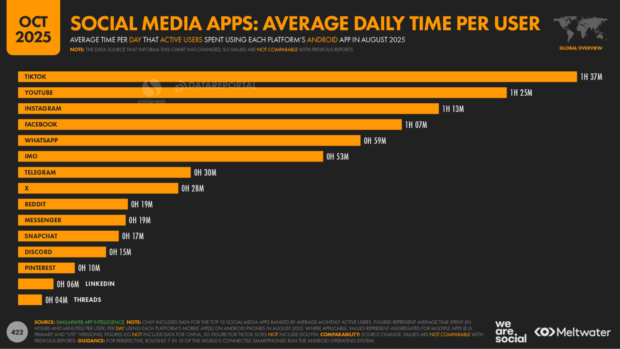
17. Pinterest users spend an average of 10 minutes per day in the app
Sure, ten minutes might not sound like much, especially next to other platforms like TikTok and YouTube. But that’s the point. People come to Pinterest with a job to do: Plan a trip, hunt down a recipe, find inspiration, or save ideas for later.
Those short, purposeful sessions signal high intent, which often matters more to marketers than raw minutes. In other words, a quick visit with a goal beats an hour of aimless scrolling.
Source: Datareportal
18. Users save 1.5 billion Pins per week
Saving is Pinterest’s core action. It’s the way users bookmark ideas, products, and inspiration to come back to later. For marketers, a save is a signal of genuine intent, and it gives your content a longer shelf life.
19. Pinterest sees more than 80 billion searches every month
People tend to file Pinterest under “social network,” but it behaves a lot more like a search engine. Every month, users run more than 80 billion searches on the platform. More than half are commercial, a different motion from scrolling a feed and hoping something good floats by.
For marketers, it changes the job entirely: Instead of interrupting people, you get to be the answer they were already searching for. Optimize your Pins for what your audience is typing in, then let Pinterest do the rest.
20. 96% of Pinterest’s top searches are unbranded
While most platforms are busy pushing ads up and organic content down, Pinterest remains a safe haven for pure creativity. That heavy tilt toward unbranded searches leaves real room for brands to get discovered, instead of fighting for paid real estate.
The platform said it best: “Content from brands doesn’t interrupt on Pinterest. It inspires.”
21. The main reason Gen Z uses Pinterest is to find information about products or brands
If Gen Z is on your radar, Pinterest is where they’re doing their homework. They’re also searching and saving more than other generations on the platform.
22. “Nails” is the most-searched keyword on Pinterest
As of September 2025, the top Pinterest searches were nails (52.1M monthly searches), wallpaper aesthetic (26.9M), hairstyles (25.9M), outfit ideas (23.6M), and wallpaper iPhone (22.2M).
Taken together, these usage stats point to one conclusion: Pinterest rewards brands that build content around what people are actively searching for.
Pinterest ecommerce and shopping statistics
Shopping intent is Pinterest’s biggest differentiator. Here’s what the numbers say about whether users actually buy.
23. Pinterest product discovery rises with age
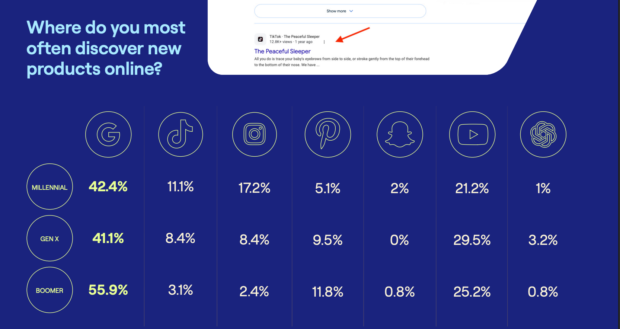
Just 5.1% of Millennials say Pinterest is where they most often discover new products, rising to 9.5% of Gen X and 11.8% of Boomers, according to GRIN’s 2025 survey.
The takeaway: If your audience skews a little older, don’t write Pinterest off. It might be exactly where they’re shopping for what’s next.
Source: GRIN
24. Engagement with shopping ads on Pinterest is climbing
Clicks and saves on Pinterest’s buyable content formats are both up 50% year over year. That means audiences are warming up to social commerce and buying directly on Pinterest.
25. 80% of weekly Pinners say they feel inspired by the shopping experience on Pinterest
On most platforms, “shopping experience” and “inspiring” don’t belong in the same sentence. Pinterest is the exception. A full 80% of weekly Pinners say shopping on the platform actually inspires them, which says a lot about how seamlessly it blends browsing, discovery, and buying.
26. Pinterest users are nearly 90% more likely to say they’re ready to shop than users on other platforms
Timing is everything in marketing, and Pinterest users tend to show up already in the shopping mood. They’re nearly 90% more likely than people on other platforms to say they’re ready to shop, which means you’re reaching them at the point of decision instead of trying to manufacture the urge from scratch.
27. Pinterest users spend an average of 40% more per month than non-Pinterest users
Pinterest shoppers aren’t just engaged, they spend more. Users spend 40% more per month than people who aren’t on Pinterest, which makes the platform worth a look if you’re measuring channels on basket size rather than clicks alone.
Pinterest marketing statistics
Fewer brands compete for attention on Pinterest than on the bigger networks. These marketing statistics show what that gap looks like in practice.
28. 22% of companies use Pinterest for marketing
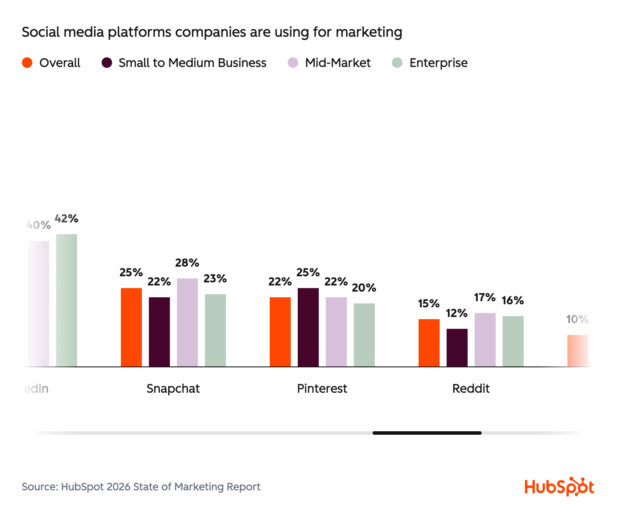
According to HubSpot’s 2026 State of Marketing Report, 22% of companies use Pinterest for marketing, which puts it ahead of Reddit (15%) but behind Snapchat (25%).
That gap is an opportunity in disguise. With fewer brands fighting for attention than on giants like Instagram or Facebook, there’s more room to stand out for the ones who do show up.
Source: HubSpot
29. Small businesses lean on Pinterest more than enterprises
25% of small and midsize businesses use Pinterest for marketing, compared to 20% of enterprises, according to HubSpot’s 2026 State of Marketing Report. That means a scrappy brand with great-looking Pins can compete with companies many times its size.
If you’re a small business wondering whether Pinterest is worth the effort, your peers have already answered.
30. Brands publish an average of 10 posts per week on Pinterest
That’s a jump of nearly 43% over 2024, according to Statista.
That kind of ramp-up shows real confidence that consistent pinning pays off (not to mention, the Pinterest algorithm likes to reward accounts that show up regularly).
31. The best time to post on Pinterest is 12 PM on Tuesdays and Fridays
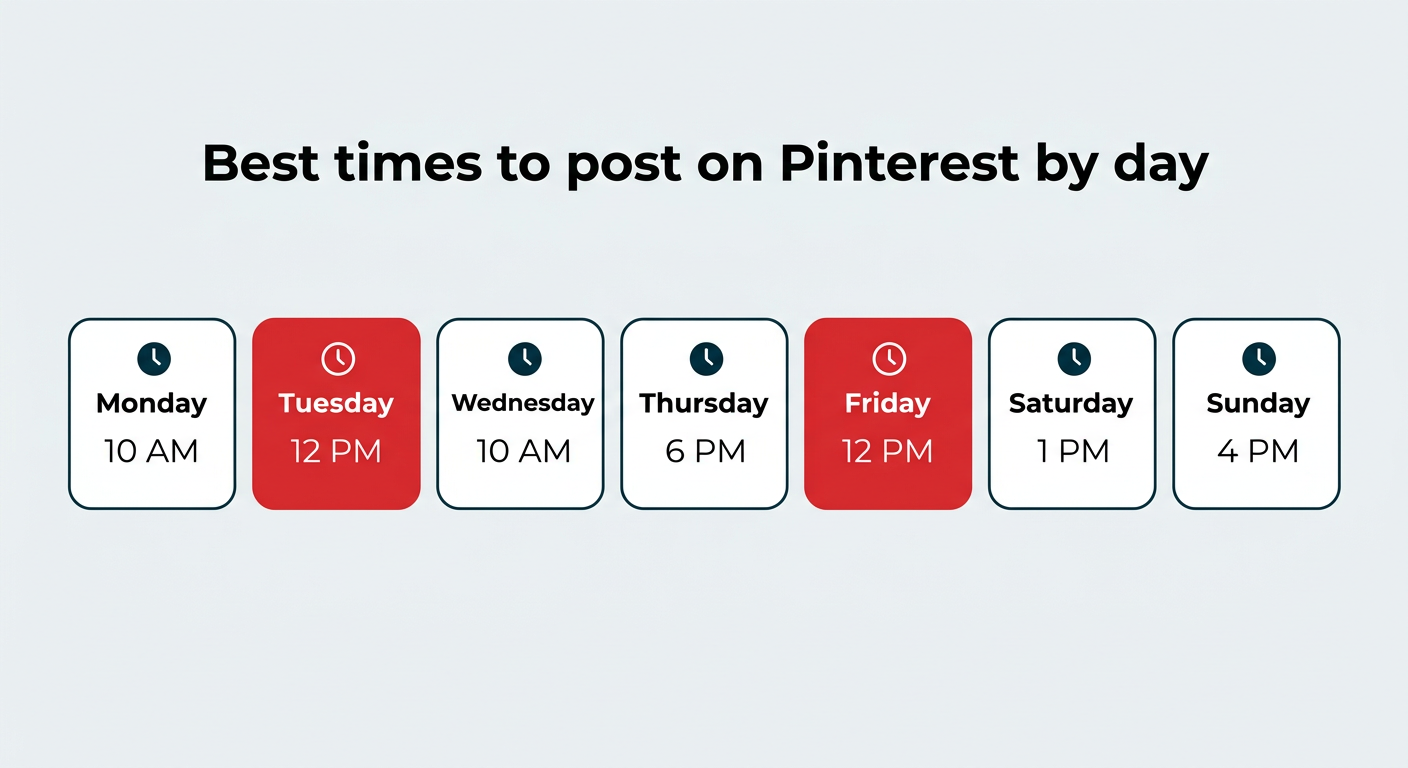
If you want your Pins to land when most people are active, aim for 12 PM on Tuesdays and Fridays, according to Hootsuite data.
Here’s when to post on Pinterest each day for peak engagement:
- Monday: 10 AM
- Tuesday: 12 PM
- Wednesday: 10 AM
- Thursday: 6 PM
- Friday: 12 PM
- Saturday: 1 PM
- Sunday: 4 PM
Pinterest content and engagement statistics
Benchmarks help you judge whether a Pin is actually performing. These figures show what to expect by format.
32. Pinterest engagement benchmarks vary widely by Pin format
Standard Pins see an average Pinterest engagement rate of 0.15% to 0.25%, while Idea Pins can reach 1%. Save rates land between 0.2% and 0.5% overall, though food, DIY, and fashion Pins often hit 1% to 2%, according to WebFX benchmarks.
Format | Average engagement rate |
|---|---|
Standard Pins | 0.15–0.25% |
Collections | 0.2–0.4% |
Video Pins | 0.3–0.5% |
Idea Pins | 0.5–1% |
Source: WebFX
If your numbers sit below these ranges, format is often the easiest lever to pull.
Pinterest revenue and financial statistics
Pinterest revenue growth signals platform health, which matters when you’re deciding where to commit ad budget.
33. Pinterest’s Q1 2026 revenue passed $1 billion
It was the first time quarterly revenue crossed that line, and it came alongside Pinterest’s tenth consecutive quarter of double-digit user growth.
34. Pinterest generated $4.2 billion in revenue in 2025
Pinterest brought in $4.2 billion across 2025, up 16% from 2024. That’s not explosive hypergrowth, but it’s the kind of consistent climb that keeps advertisers and investors confident.
35. Pinterest’s average revenue per user is $2.16 globally
As of Q4 2025, average revenue per user (ARPU) was $9.41 in the US and Canada, $1.59 in Europe, and just $0.27 in the rest of the world.
36. Pinterest’s fastest ad revenue growth is coming from outside North America
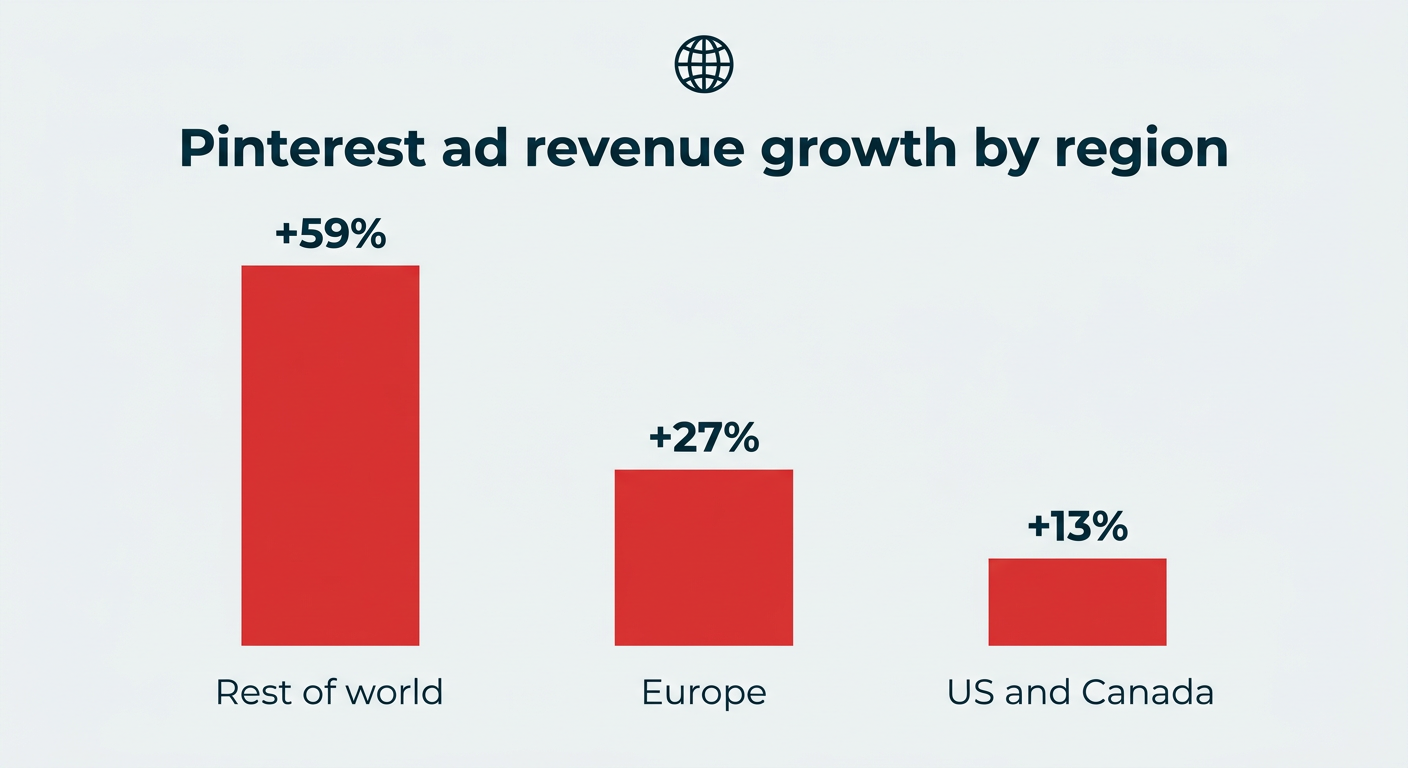
In Q1 2026, revenue grew 59% in the rest of the world, 27% in Europe, and 13% in the US and Canada.
For brands with a global footprint, that’s a cue to look at Pinterest in regions you might have written off, since the platform is actively growing those audiences.
Pinterest advertising statistics
With that revenue picture in mind, here are the Pinterest advertising stats that affect your media plan.
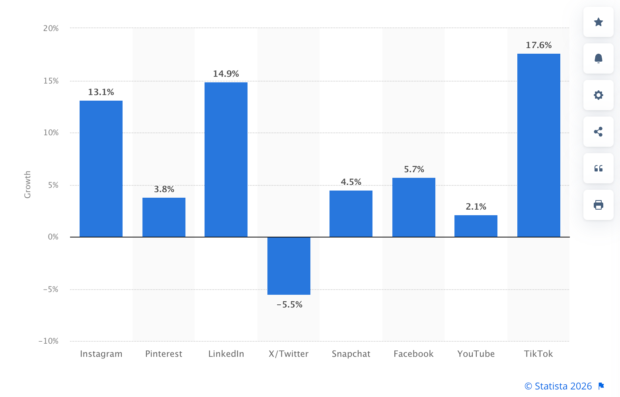
37. Pinterest’s advertising audience grew 3.8% in 2025
Pinterest’s ad audience (the pool of users marketers can actually target) grew 3.8% over the past year. For context, Pinterest outpaced YouTube (2.1%) but fell short of TikTok (17.6%) and Instagram (13.1%).
Source: Statista
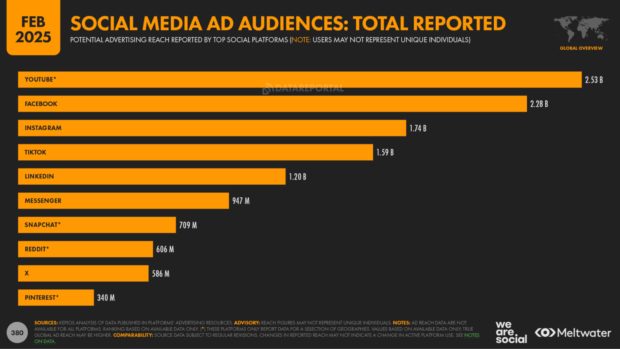
38. Pinterest’s ad reach is 340 million
Pinterest’s ads can reach about 340 million people, which works out to 6.1% of all internet users and 4.1% of the world’s total population. For a platform that often gets labeled niche, that’s a meaningful slice of the global online audience.
Source: DataReportal
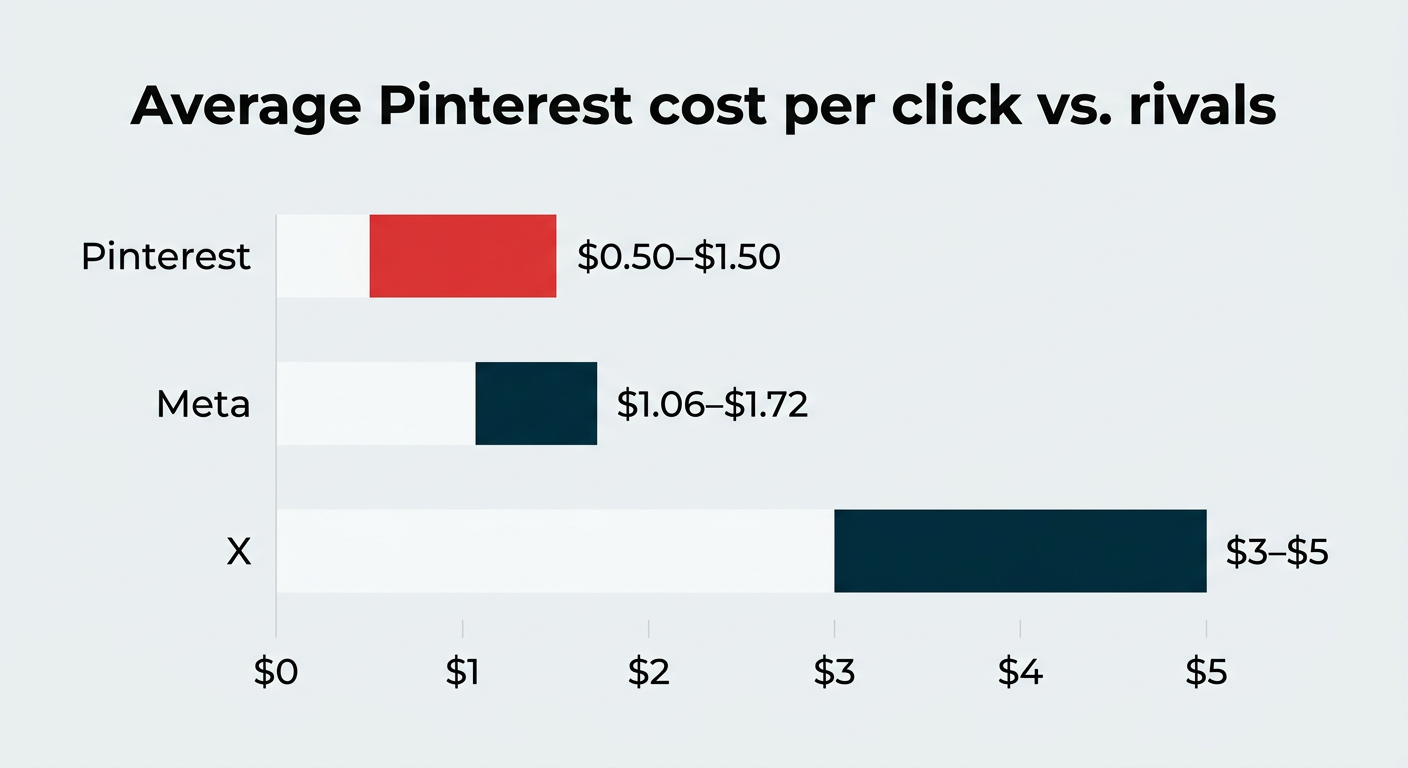
39. Pinterest ads have an average cost per click of $0.50 to $1.50
Pinterest is refreshingly affordable for advertisers. The average cost per click (CPC) runs between $0.50 and $1.50, undercutting Meta ($1.06 to $1.72) and sitting well below X ($3 to $5), according to WebFX benchmarks.
Lower click costs mean your budget stretches further, which can help improve return on ad spend (ROAS) when those clicks convert. And for brands testing new social media platforms, that low cost of entry makes Pinterest an easy place to experiment.
40. Promoted Pins typically convert at 2% to 4%
Promoted Pins typically see conversion rates of 2% to 4%. For luxury and home goods, that climbs to 5% to 8%.
How to track your Pinterest statistics
Your own Pinterest analytics matter more than any industry benchmark. You can access them through Pinterest Analytics, which comes free with a Pinterest business account (personal accounts don’t include it).
Once you’ve converted or created a business account, Pinterest Analytics shows you:
- Impressions: How many times your Pins appeared on screen
- Saves: How many people bookmarked your Pin to a board
- Outbound clicks: How many people clicked through to your site
- Engagement rate: Total engagements divided by impressions
- Audience insights: Age, gender, location, and interest data for the people reaching your content
One caveat worth knowing: Pinterest doesn’t show you which individual people viewed your profile or Pins. All of this data is aggregate. If Pinterest is one of several networks you manage, a cross-network analytics dashboard keeps everything in one view.
FAQ: Pinterest statistics
What are the latest Pinterest statistics marketers need to know?
Is Pinterest growing or declining in 2026?
What Pinterest demographics and behavior trends matter most for brands?
How do Pinterest engagement and conversion statistics compare to other social platforms?
What Pinterest statistics should businesses use to inform marketing strategy?
How are Pinterest usage and shopping trends changing for marketers?
How can I see my Pinterest statistics?
Can you track who views your Pinterest?
What is the average engagement rate on Pinterest?
How much do Pinterest ads cost?
Save time managing your social media marketing strategy with Hootsuite. Publish and schedule posts, find relevant conversions, measure results, and more â all from one dashboard. Try it free today.
The post 40 Pinterest stats that matter to marketers in 2026 appeared first on Social Media Marketing & Management Dashboard.
* This article was originally published here To read more articles like this visit us at yourdigitalmarketingbootcamp.blogspot.com