How to build a social media approval process (2026)
Key takeaways
- A social media approval process is a step-by-step system for reviewing, editing, and approving content before it goes live, typically covering stages from drafting through final sign-off.
- The most common reasons approval workflows fail are scattered feedback, unclear ownership, and post-approval changes that bypass the process.
- Enterprise teams should choose the right workflow type (linear, tiered, parallel, or conditional) based on team size, compliance requirements, and publishing volume.
- Building an effective workflow requires defined roles, centralized tools, compliance checkpoints, and a way to measure whether the process is actually working.
What is a social media approval process?
A social media approval process is the step-by-step system your team uses to review, edit, and approve content before it goes live. It brings structure to the creative process so that social media posts don’t slip through with typos, broken links, or off-brand messaging.
The workflow usually starts with a draft (written by a content creator or strategist), moves through internal reviews, and ends with final sign-off. In some cases, there may also be feedback loops, legal review, or design tweaks along the way.
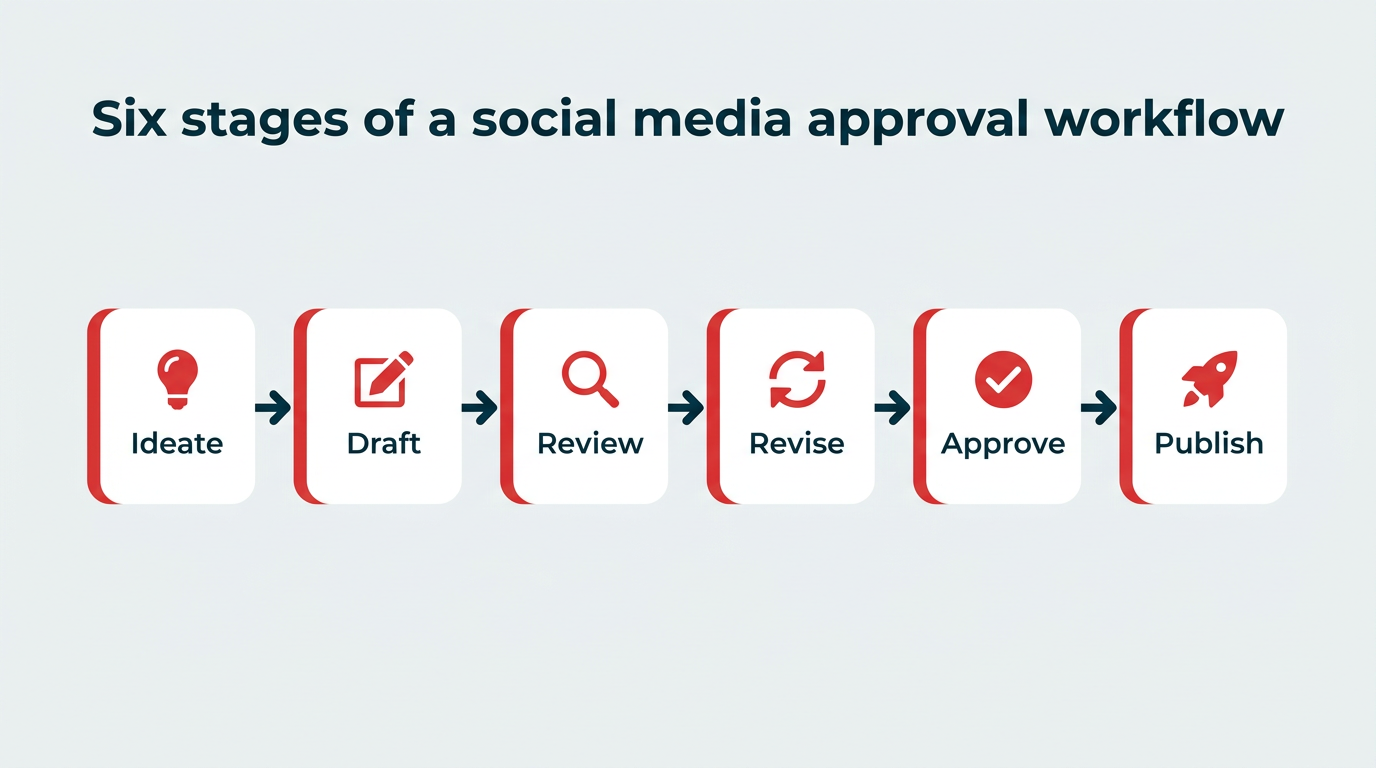
Most approval workflows follow these core stages:
- Ideate: Brainstorm content topics, campaigns, and messaging angles.
- Draft: Write copy, select visuals, and add links or hashtags.
- Review: An editor, peer, or manager checks for quality, accuracy, and brand alignment.
- Revise: The creator incorporates feedback and updates the draft.
- Approve: A final approver (or approval chain) signs off on the content.
- Publish/schedule: The approved post goes live or is queued for publishing.
This diagram shows how content moves through ideation, drafting, review, revision, approval, and publishing in a typical social media workflow.
Good workflows are built for how your team actually works. They account for your team size, your publishing schedule, and how your stakeholders prefer to communicate. The goal isn’t to over-engineer the process — it’s to keep your social media strategy moving smoothly and avoid last-minute surprises.
In short, a social media approval process gives every post a clear path from idea to publish, with the right people reviewing at the right time.
Bonus: Download our bundle of free customizable social media workflow templates and set up a clear approval process for your team in minutes.
What makes a good social media approval process?
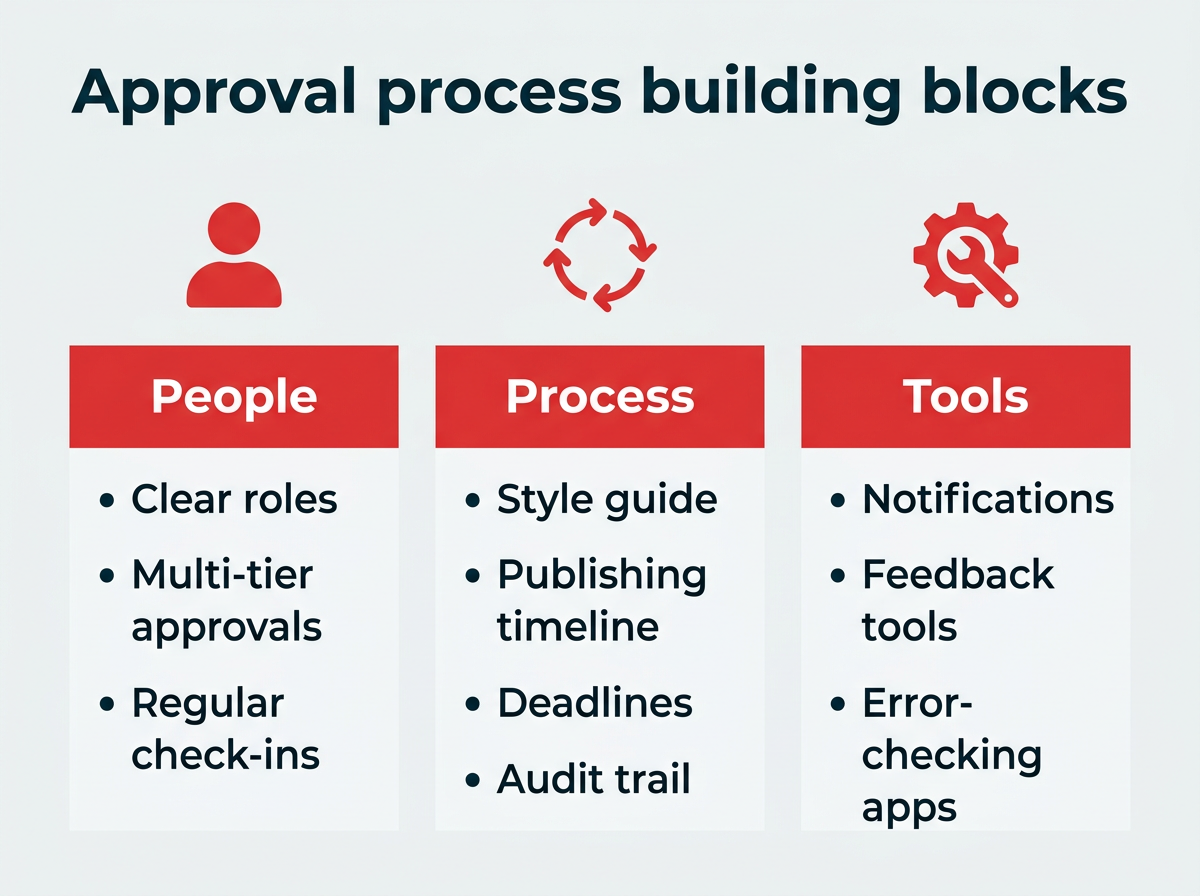
Setting up a solid content approval process takes a few key building blocks. Here’s a checklist, grouped by the three areas that matter most.
People
- Clear roles: Everyone should know who creates, who reviews, and who approves.
- Multi-tier approval capability: For enterprise or regulated teams, build in multiple layers of sign-off so sensitive content gets the scrutiny it requires.
- Regular check-ins: Set a reminder to review and update your workflow every few months.
Process
- Social media style guide: Helps your team stay on-brand with voice, hashtags, tone, and more.
- Publishing timeline: A plan that shows when posts are due and when they go live.
- Deadlines (internal and external): Keeps everyone on track, especially for launches, events, or client work.
- Audit trail and version history: Keep a record of who changed what, and when, so you can trace decisions and roll back if needed.
Tools
- Reliable notification system: Make sure the right people are pinged at the right time (not buried in Slack threads).
- Easy communication tools: Choose a tool that makes it simple to leave feedback or ask questions.
- Error-checking apps: Use tools that catch broken links, spelling errors, or duplicate posts before they go out.
Why does your team need a social media approval workflow?
Your team needs a social media approval workflow to catch mistakes, maintain consistency, and save time. It’s useful for any team or individual social media manager who wants to stay on track and publish high-quality content.
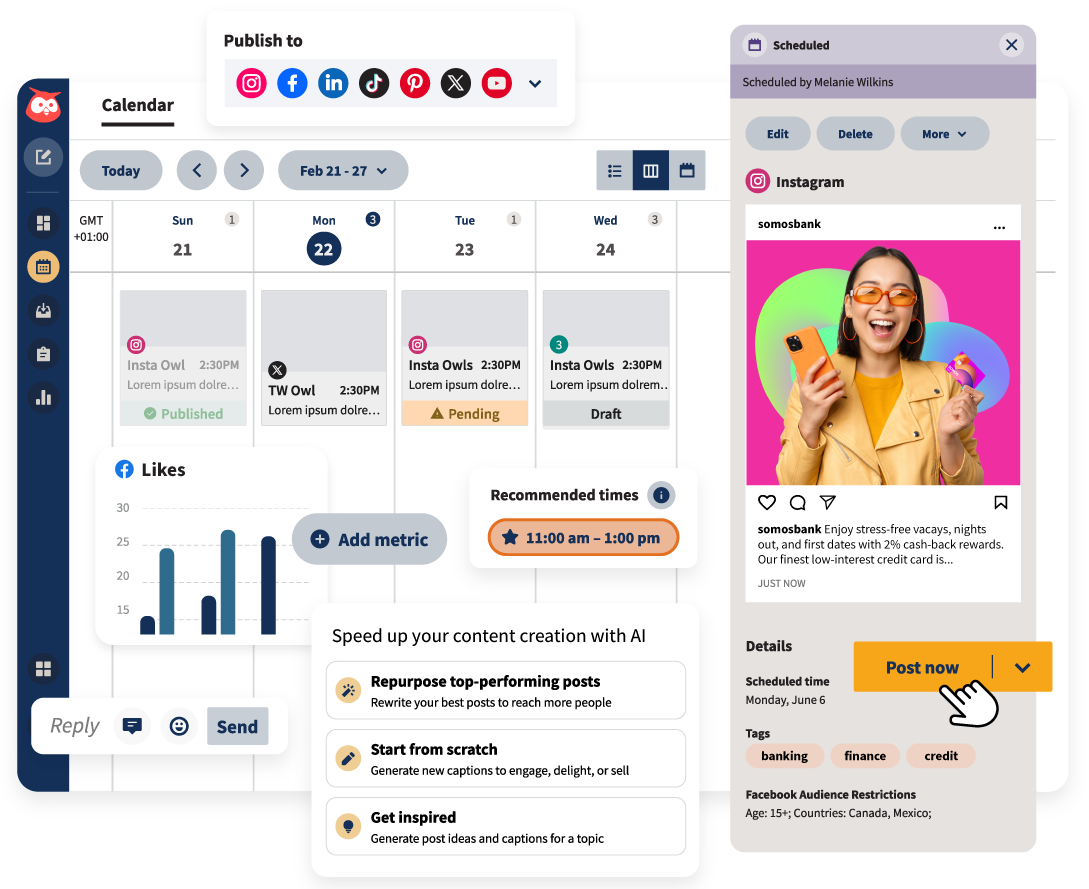
A unified calendar view helps teams track what’s pending approval, what’s approved, and what’s scheduled across multiple social accounts.
Social media workflows catch mistakes. Typos, broken links, off-brand language — these are easy to miss when you’re moving fast. A second (or third) set of eyes makes a big difference.
It also helps with consistency. When multiple people are creating content, a shared approval system ensures your posts still sound like they came from one brand voice. This matters just as much for small brands as it does for big ones.
Then there’s the time-saving factor. With a clear plan in place, teams spend less time chasing content approvals or making last-minute edits. That’s critical, since inefficient content creation and reviews remain a top content operations challenge. With a clear workflow, everyone knows:
- What’s due
- When to review
- Who gives the final go-ahead
That way, if there’s an issue down the line, it’s easy to backtrack and figure out exactly who did what, and how to fix it going forward.
In regulated industries, an approval step can also act as a safety net. It keeps your content compliant and reduces the risk of something going live that shouldn’t.
And finally: feedback. A good workflow builds in space for it. Whether it’s catching a small issue or rethinking a headline, reviewers get the chance to optimize a piece of content before it hits publish.
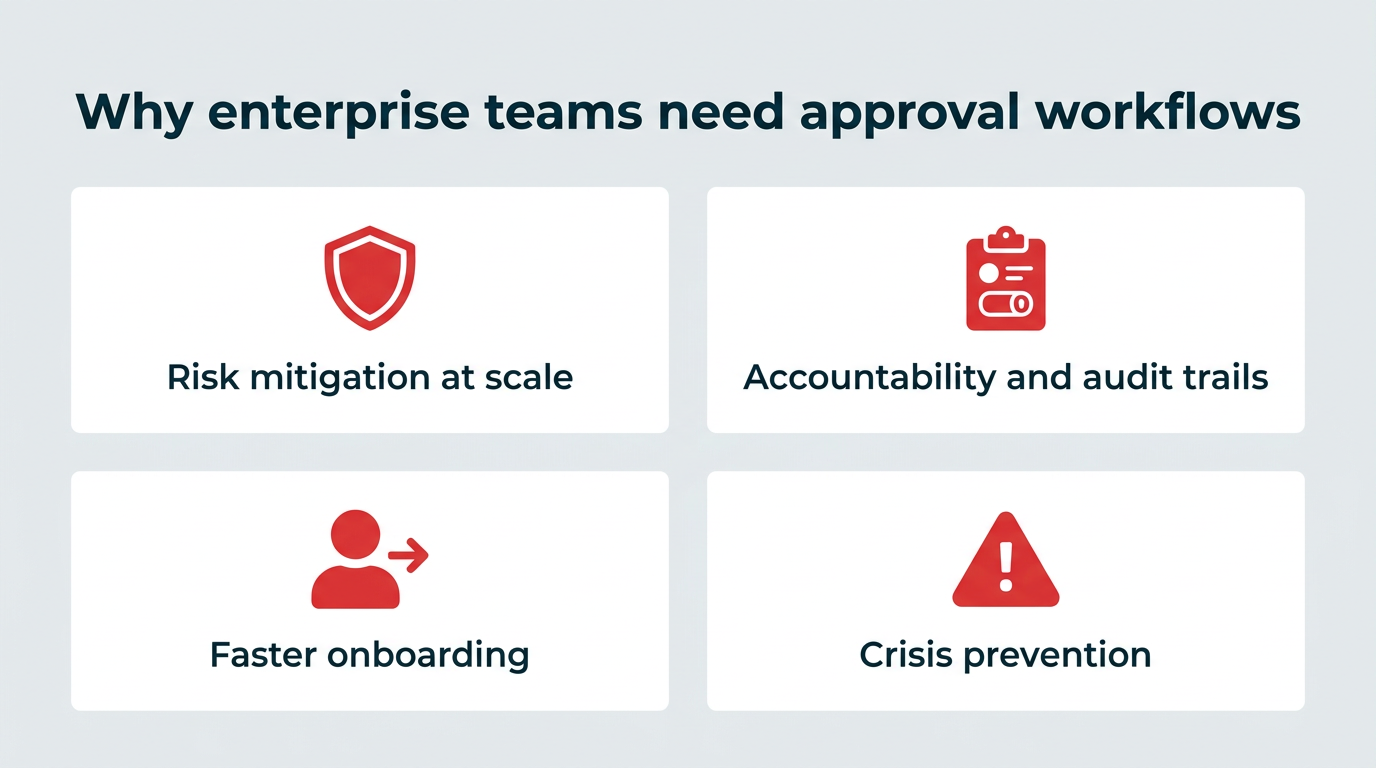
Beyond these fundamentals, a structured approval workflow also supports enterprise teams in a few additional ways:
- Risk mitigation at scale: The more accounts and regions you manage, the more opportunities there are for something to go wrong. A consistent process reduces that exposure.
- Accountability and audit trails: When every approval is logged, you have a clear record of who signed off on what. That matters for internal reviews and external compliance alike.
- Faster onboarding: New team members can ramp up more quickly when there’s a documented process to follow, rather than relying on tribal knowledge.
- Crisis prevention: A review step gives your team a chance to flag content that could be misread or poorly timed before it reaches your audience.
Enterprise teams rely on approval workflows for risk mitigation, audit trails, faster onboarding, and crisis prevention at scale.
What are the different types of social media approval workflows?
The main types of social media approval workflows are linear, tiered (multi-level), parallel, conditional, and hybrid. Not every team needs the same approval structure. The right workflow type depends on your team size, publishing volume, and how much oversight your content requires.
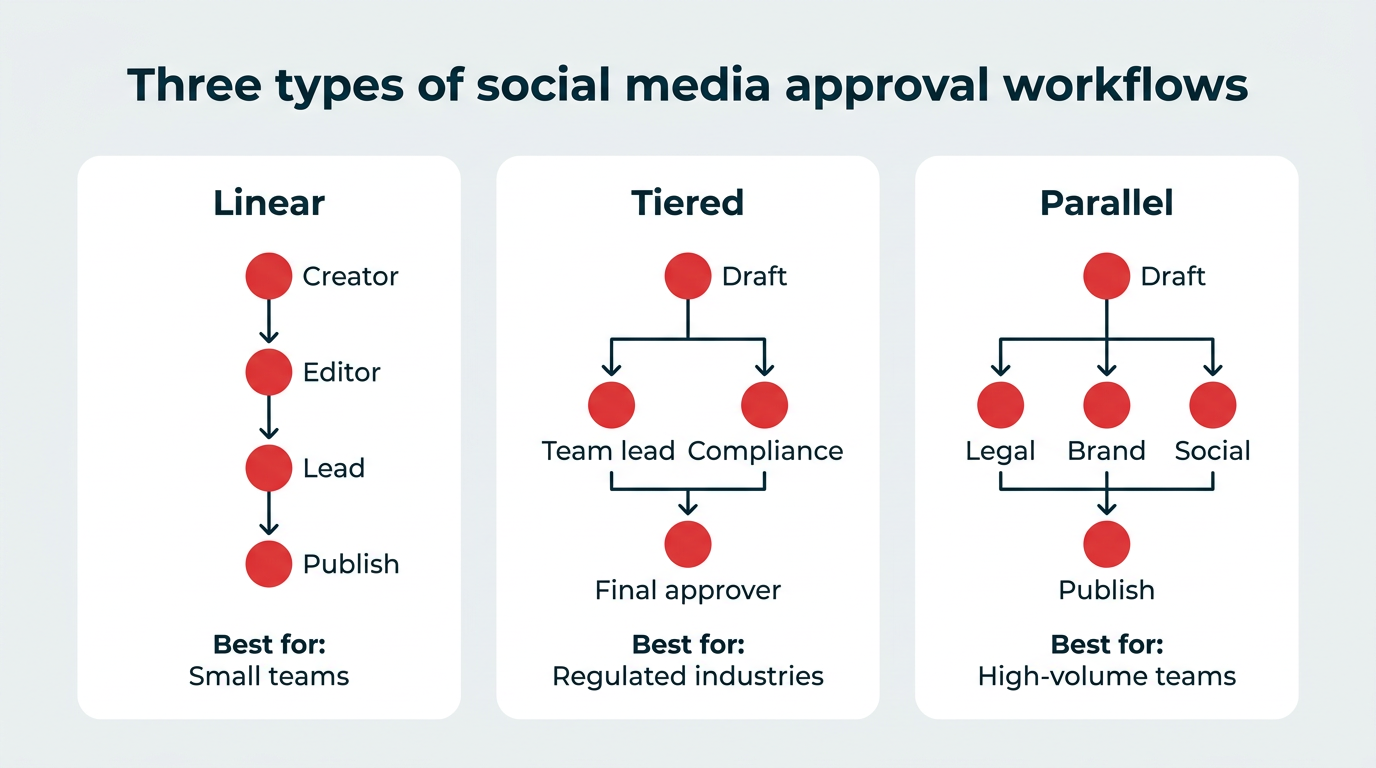
Linear approval
In a linear workflow, content moves through one reviewer at a time in a fixed sequence. For example: Creator → editor → brand lead → publish. Each person reviews and passes the content forward.
This is the simplest model and works well for small teams or low-volume publishing schedules where only a few people need to weigh in.
Tiered (multi-level) approval
A tiered workflow adds multiple layers of sign-off. Content might need approval from a team lead, then a compliance reviewer, then a final approver before it can go live. This is common in enterprise organizations and regulated industries like finance or healthcare.
Hootsuite’s multi-level approval feature supports this structure, letting you configure second and third tiers of approvers for any social account.
Parallel approval
In a parallel workflow, multiple reviewers assess content at the same time rather than in sequence. For example, a legal reviewer, brand manager, and regional lead might all receive a draft simultaneously and provide feedback within the same window.
This model significantly reduces turnaround time, making it a strong fit for large teams where several stakeholders need to weigh in on every post. The tradeoff is that reviewers may occasionally give conflicting feedback. To manage this, designate one person as the final decision-maker who resolves any disagreements before the post moves to publish.
Conditional (exception-based) approval
A conditional workflow routes content through different approval paths based on predefined criteria. Those criteria might include content type, platform, campaign, or risk level.
For example, a routine organic post might only need one-step approval from a team lead, while a paid campaign launch or crisis-adjacent content triggers a multi-tier review involving legal and senior leadership. This model is common in enterprise organizations managing multiple brands or regions, where applying the same level of scrutiny to every post would create unnecessary bottlenecks.
Hybrid approval
Many enterprise teams combine elements of the models above. A hybrid approach might use linear approval for day-to-day content, parallel review for campaign launches, and conditional routing for compliance-sensitive posts. The key is documenting which path applies to which content type so the team doesn’t have to guess.
Here’s a quick comparison to help you match the right workflow to your team:
Workflow type | Best for | Typical reviewers | Speed | Compliance suitability |
|---|---|---|---|---|
Linear | Small teams, low volume | 1-2 | Fast | Low to moderate |
Tiered (multi-level) | Enterprise, regulated industries | 2-4 | Moderate | High |
Parallel | Large teams, multiple stakeholders | 2-5 (simultaneous) | Fast | Moderate to high |
Conditional | Multi-brand or multi-region orgs | Varies by content type | Varies | High |
Hybrid | Complex enterprise environments | Varies | Varies | High |
Linear, tiered, and parallel workflows each offer different advantages depending on team size, stakeholder needs, and compliance requirements.
Why do most social media approval processes break down?
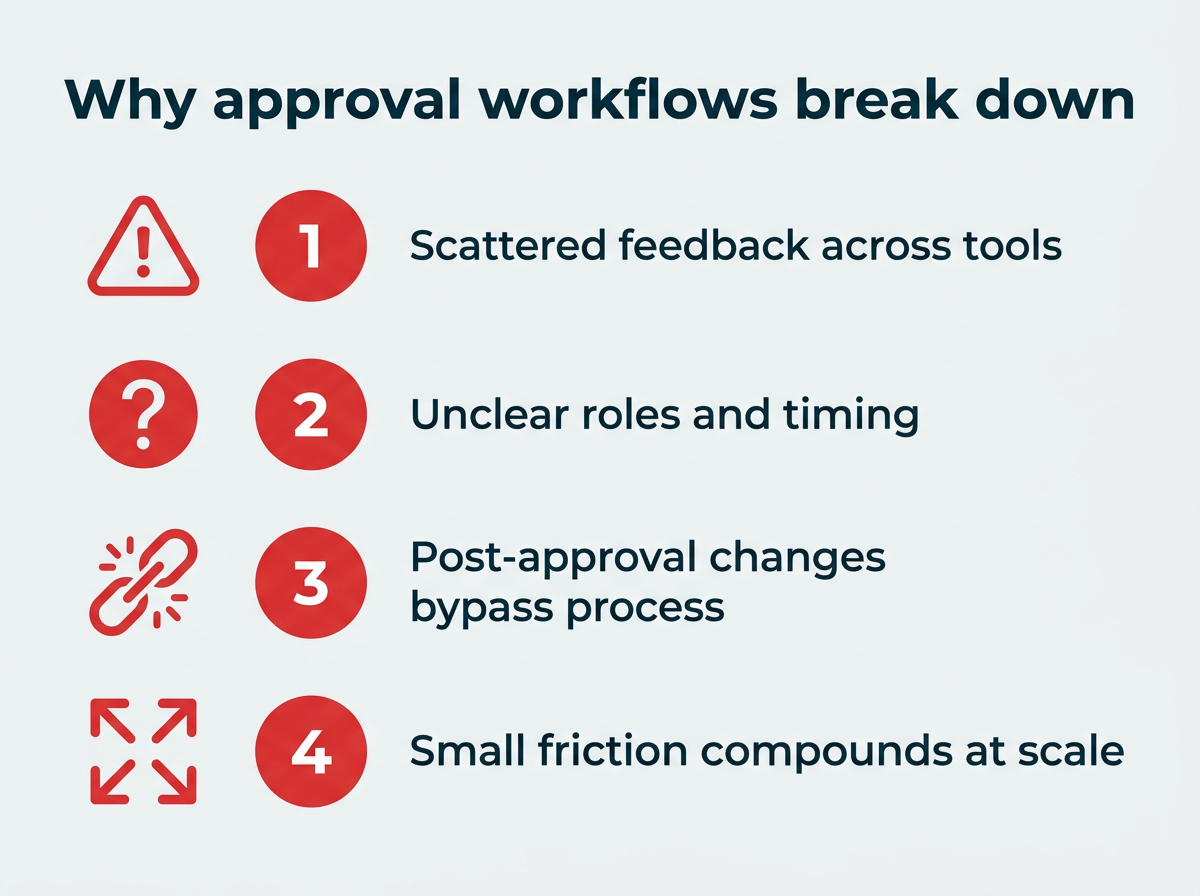
Most social media approval processes break down because of scattered feedback, unclear roles, post-approval changes that bypass the workflow, and friction that compounds at scale. Even teams with good intentions can end up with a broken process. Here are the most common reasons workflows fall apart.
Feedback is scattered across too many tools
When feedback lives in email threads, Slack messages, Google Doc comments, and text messages simultaneously, things get lost. A reviewer might leave a note in one place while the creator is checking another. The result is missed edits, duplicated effort, and frustration on both sides.
Centralizing feedback in a single platform, whether that’s a social media management tool or a shared workspace, eliminates most of this friction.
Roles and timing are unclear
If nobody knows who reviews content, in what order, or by when, bottlenecks are inevitable. A post might sit in a queue for days because the reviewer didn’t realize it was their turn. Or two people might review the same draft and give conflicting feedback.
Defining clear roles and deadlines at the start of the process prevents most of these delays.
Changes happen after approval
Post-approval edits that bypass the workflow are one of the biggest risks, especially in regulated industries where unapproved content can lead to legal consequences. Even in less regulated environments, last-minute changes can introduce errors that the review process was designed to catch.
Any change made after sign-off should go back through the approval chain. If that feels too slow, it’s a sign your workflow needs a faster path for minor edits, not that the process should be skipped entirely.
Scale turns small friction into chaos
A minor process gap that barely registers on a small team can become a serious problem at enterprise scale. When you’re managing many social accounts across regions, even small delays per post add up quickly across dozens or hundreds of posts per week. Teams scaling their content operations feel this friction most acutely.
At scale, unclear escalation paths, inconsistent approval criteria across brands, and a lack of centralized visibility into what’s pending or approved all compound. The fix isn’t just better tools. It’s a workflow designed for the volume and complexity your team actually operates at.
How do you build a social media approval workflow step by step?
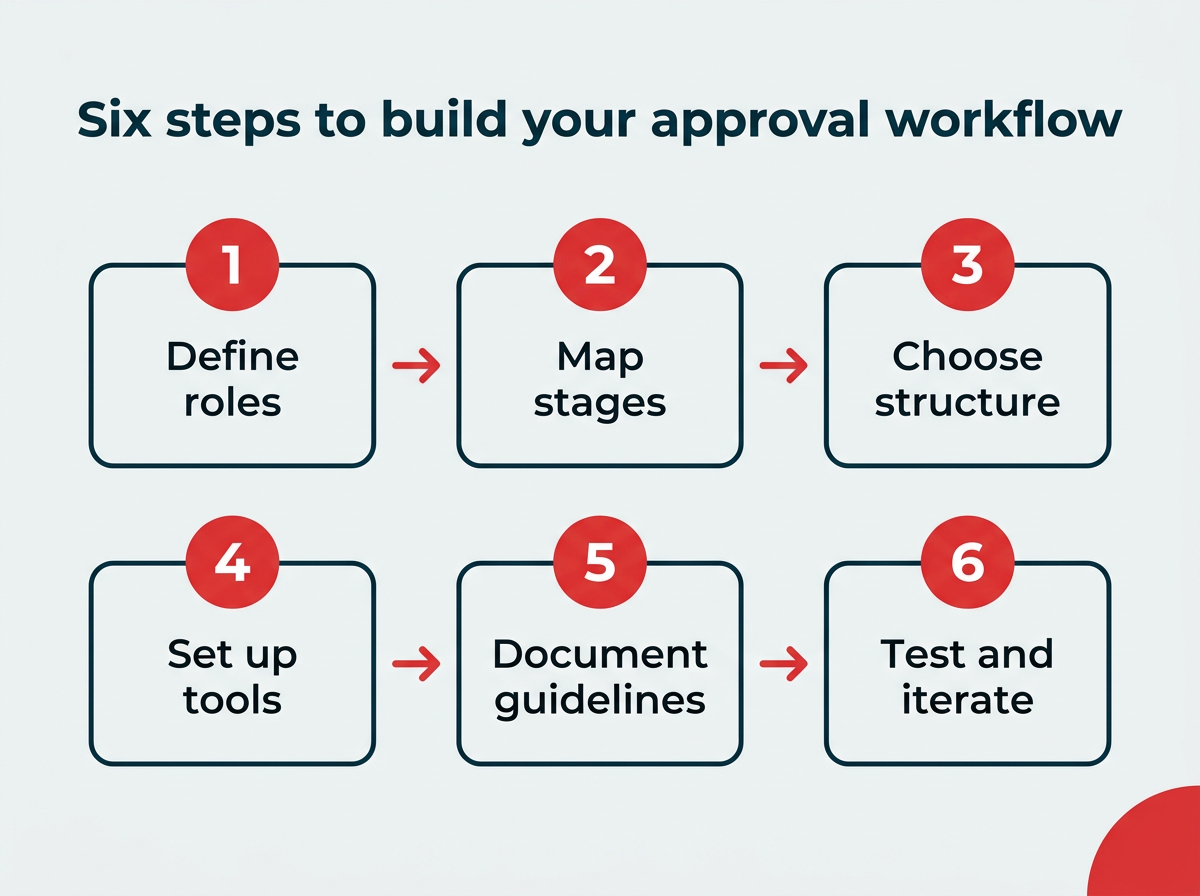
Building a social media approval workflow that holds up under real publishing pressure comes down to six steps. Here’s the summary, followed by a detailed breakdown of each.
- Define roles and responsibilities
- Map your content workflow stages
- Choose your approval structure
- Set up your tools and permissions
- Document guidelines and share with your team
- Test, measure, and iterate
Step 1: Define roles and responsibilities
Start by clarifying who does what. Ambiguity here is the root cause of most bottlenecks. Every person involved in the workflow should know their role before the first draft is written. If you’re still building your social media team, nail down your structure before layering on an approval process.
Common roles in a social media approval workflow include:
- Content creator: Writes copy, selects visuals, and prepares the draft for review.
- Editor/reviewer: Checks for quality, accuracy, tone, and brand alignment.
- Compliance/legal reviewer: Reviews content for regulatory requirements (critical in finance, healthcare, and government).
- Final approver: Gives the last sign-off before the post is scheduled or published.
- Publisher: Schedules or publishes the approved content. In some teams, this is the same person as the creator or approver.
Enterprise teams often need role-based permissions so that only authorized users can move content to the next stage or publish it. This prevents accidental publishing and keeps the workflow enforceable.
Step 2: Map your content workflow stages
Use the six-stage model from earlier (ideate, draft, review, revise, approve, publish) as your starting point, then customize it for your team. Some teams may need an additional compliance review stage. Others may combine review and revise into a single loop.
For each stage, document the expected turnaround time. For example: drafts due 48 hours before publish date, reviews completed within 24 hours, revisions returned same day. These SLAs keep the workflow moving and give everyone a shared sense of pace.
Step 3: Choose your approval structure
Match your team profile to the right workflow type. As a general guide:
- Small teams with low compliance needs can start with a linear workflow.
- Teams managing many accounts across regions should consider tiered or conditional approval.
- If multiple stakeholders need to review simultaneously, parallel approval reduces turnaround time.
- Complex enterprise environments often benefit from a hybrid model that adapts based on content type.
Refer to the comparison table in the types section above to weigh the tradeoffs.
Step 4: Set up your tools and permissions
Centralizing approvals in one platform is the single biggest efficiency gain most teams can make. Look for a tool that lets you configure role-based permissions, route content through predefined approval chains, and send automated notifications when a post is ready for review.
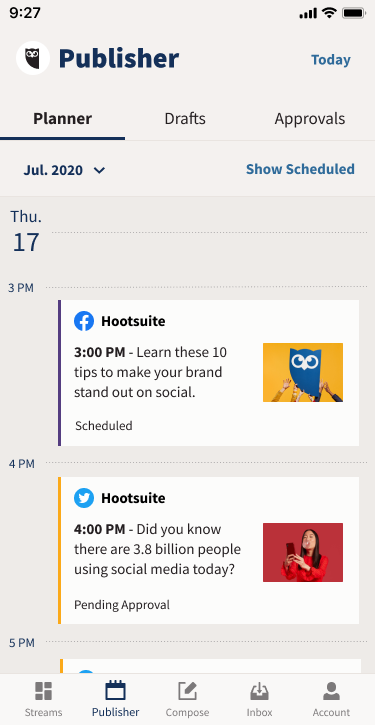
Hootsuite’s approval workflow features support multi-level approvals, role-based permissions, and automated notifications, so nothing publishes without sign-off. You can configure approval chains per social account and lock posts after they’ve been approved.
.png)
Step 5: Document guidelines and share with your team
Create a one-page approval process document that covers your brand guidelines, approval criteria, escalation paths, and turnaround SLAs. Pair it with a formal social media policy, so your team has both operational and governance guardrails.
Share it during onboarding and revisit it whenever your team structure or publishing volume changes.
Step 6: Test, measure, and iterate
Run the workflow for a few weeks before locking it in. Track how long posts take from draft to publish, where they stall, and how many revision rounds each post requires. If a particular stage consistently creates delays, that’s your signal to adjust roles, SLAs, or tools.
No workflow is perfect on the first try. The goal is a process that improves with each cycle.
What features should you look for in a social media approval tool?
Choosing the right tool can make or break your approval workflow. Not every platform handles approvals the same way, so it’s worth evaluating options against the features that matter most for enterprise teams.
Here’s what to prioritize:
- Role-based permissions: Control who can create, edit, approve, and publish content. This prevents unauthorized changes and enforces your workflow.
- Multi-level approval chains: Route content through two or more tiers of reviewers before it can be published.
- Post-locking after approval: Prevent edits to approved content without re-triggering the approval process.
- Version history and audit trail: Log every change, comment, and approval so you can trace decisions and demonstrate compliance.
- True-to-platform previews: Let reviewers see exactly how a post will look on each platform before approving.
- Automated notifications and reminders: Alert reviewers when content is waiting for them, and escalate if deadlines pass.
- Calendar visibility across channels: Give the full team a view of what’s scheduled, pending, and approved across every account.
- Compliance and governance controls: Support for content archiving, keyword flagging, and regulatory review stages.
- Integration with enterprise tools: Connect with your CRM, DAM, Slack, or BI tools so approvals fit into your existing stack.
- Scalability across brands and regions: Handle multiple brands, languages, and regional teams without requiring separate workflows for each.

How does Hootsuite support social media approval workflows?
Hootsuite is built to handle the complexity of enterprise approval workflows without slowing your team down. Here’s how the platform supports each stage of the process.
With Hootsuite, you can configure multi-level approvals for any social account, routing content through two or three tiers of reviewers before it’s eligible for publishing. Role-based permissions ensure that only authorized team members can move posts forward or publish them.
Once a post is approved, it’s locked. If someone needs to make a change, the post goes back through the approval chain. Every action is logged, creating an audit trail that supports both internal reviews and external compliance requirements.
Hootsuite also sends automated notifications to reviewers when content is ready for their input, reducing the back-and-forth that slows most teams down. And because everything lives in one calendar view, your team always knows what’s pending, what’s approved, and what’s scheduled across every account.
For teams that use OwlyWriter AI to draft content, those drafts feed directly into the same approval pipeline, so AI-assisted content goes through the same review process as everything else.
Hootsuite integrates with tools like Salesforce, Adobe, and Slack, so approvals fit into the workflows your team already uses.
How do you handle social media approvals in regulated industries?
Social media approvals in regulated industries carry higher stakes. In sectors like finance, healthcare, government, and pharma, publishing unapproved content isn’t just a brand risk. It can result in fines, legal action, or loss of licensure.
That means your approval workflow needs to account for requirements that go beyond brand consistency. Here are the key considerations:
- Mandatory compliance review stage: Every post should pass through a legal or compliance reviewer before it’s approved for publishing. This isn’t optional in most regulated environments.
- Post-locking: Once content is approved, it must be locked to prevent unauthorized edits. Any change, no matter how small, should re-trigger the approval chain.
- Comprehensive audit trails: Regulators may require proof of who approved what and when. Your tool should log every action automatically.
- Content archiving: Some regulations (such as FINRA for financial services) require that all published social media content be archived and retrievable for a set period.
- Keyword and topic flagging: Automated flags for sensitive terms or claims can catch potential violations before they reach a reviewer.
Industry-specific considerations include:
- Financial services (FINRA, SEC): All social media communications may be treated as advertising and must be archived. Claims about performance or returns require pre-approval.
- Healthcare (HIPAA): Sharing patient information without consent is illegal. Even well-intentioned posts can violate privacy rules if they include identifiable details.
- Government and public sector: Accessibility requirements, records retention laws, and public communications standards add layers of review.
- Pharma (FDA): Product claims, adverse event reporting obligations, and fair balance requirements apply to social media just as they do to traditional advertising.
The right approval tool should make compliance enforceable, not just aspirational, by building these controls directly into the workflow. Enterprise compliance tools are purpose-built for this.
How do you measure whether your approval workflow is working?
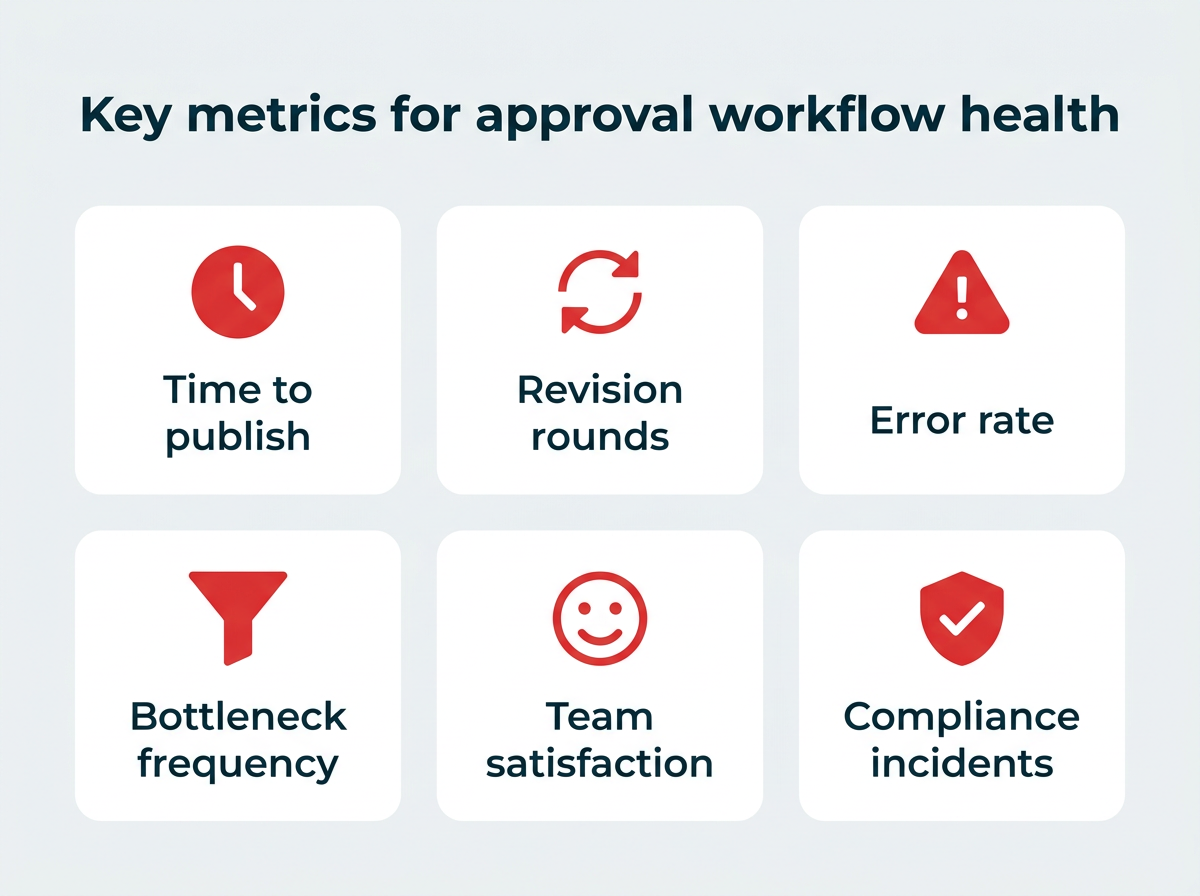
An approval workflow is only as good as the results it produces. To know whether yours is actually working, track these metrics on a regular basis:
- Average time from draft to publish: How long does it take a post to move through the full workflow? If this number is climbing, you likely have a bottleneck.
- Number of revision rounds per post: One or two rounds is normal. If posts consistently require three or more, your briefing or guidelines may need tightening.
- Error rate after publishing: Track how often posts need correction after going live. A good workflow should drive this close to zero.
- Bottleneck frequency: Identify where posts stall most often. Is it at the compliance review stage? The final approver? Use this data to redistribute workload or adjust SLAs.
- Team satisfaction: Ask your team whether the process feels manageable. A workflow that technically works but frustrates everyone will eventually be bypassed.
- Compliance incidents: For regulated teams, track how many posts are flagged or pulled after publishing for compliance reasons. This is the metric that matters most to leadership.
Review these metrics quarterly and adjust your workflow as your team, volume, or compliance requirements evolve.
Social media approval process template
Here’s a reusable template you can adapt for your team. Customize the roles, SLAs, and escalation paths based on your workflow type and compliance needs.
Stage | Owner | Action | SLA | Escalation |
|---|---|---|---|---|
Ideate | Content creator | Submit content brief or topic for approval | 2-3 days before draft deadline | Escalate to team lead if no response in 24 hours |
Draft | Content creator | Write copy, select visuals, add links/hashtags | 48 hours before publish date | Flag to editor if blocked on assets |
Review | Editor/reviewer | Check quality, accuracy, tone, brand alignment | 24 hours after draft submission | Auto-notify if review not started within 12 hours |
Compliance review | Legal/compliance reviewer | Verify regulatory compliance and flag risks | 24 hours after editorial review | Escalate to compliance lead if unreviewed after 24 hours |
Approve | Final approver | Sign off on content for publishing | 12 hours after compliance review | Escalate to department head if no response |
Publish/schedule | Publisher | Schedule or publish approved content | Per content calendar | Re-route to approver if last-minute changes needed |
FAQ: Social media approval workflow
What is the biggest challenge when implementing a social media approval workflow?
How many approval tiers should an enterprise team use?
Can approval workflows handle multiple brands and regions?
How do you prevent bottlenecks in an approval workflow?
Should AI-generated content go through the same approval process?
Save time managing your social media marketing strategy with Hootsuite. Publish and schedule posts, find relevant conversions, measure results, and more — all from one dashboard. Try it free today.
The post How to build a social media approval process (2026) appeared first on Social Media Marketing & Management Dashboard.
* This article was originally published here To read more articles like this visit us at yourdigitalmarketingbootcamp.blogspot.com